Is a Tankless Water Heater Worth It in Charlotte, NC?
A tankless water heater may be worth the investment for Charlotte homeowners who want continuous hot water, improved energy efficiency, and a longer potential equipment lifespan. However, higher installation costs mean a traditional tank water heater may be the better financial choice for some households.
Tankless water heaters cost more upfront than a standard tank replacement — often significantly more. So the question most Charlotte homeowners ask at replacement time is a fair one: is the higher cost actually worth it, or is a standard tank water heater the smarter choice?
The honest answer is: it depends on your household’s specific situation. At Winn’s Plumbing, we provide no-fee initial assessments and upfront pricing before any work begins, so you can compare both options with full information before making a decision. Here is how to think through it.
What a Tankless System Offers Compared to a Tank
A standard tank water heater replacement costs less upfront than a whole-home gas tankless system. The gap may narrow over time through reduced energy consumption, but it is a real consideration at the point of installation. If the home’s gas line also needs modification to meet the BTU demand of a tankless unit, the upfront difference can be larger — though not every installation requires a gas line upgrade.
Here is what the difference in upfront investment can deliver:
- Reduced energy consumption. A tankless unit heats water only when it is needed, rather than continuously maintaining a stored tank. The US Department of Energy estimates tankless units can be more energy-efficient than storage tank heaters, depending on daily usage volume. Actual savings vary by household usage, equipment, and energy rates — lower energy bills are possible but not guaranteed.
- Longer potential lifespan. A properly installed and maintained tankless water heater can last 20 years or longer. Traditional storage tank water heaters commonly last around 10–15 years. Actual lifespan depends on water quality, usage, and maintenance history.
- Continuous hot water within rated capacity. A tankless unit heats water on demand as it flows through the system. A properly sized unit can supply multiple showers simultaneously, depending on flow capacity and incoming water temperature — though every unit has a maximum gallons-per-minute limit that determines how many fixtures it can serve at once.
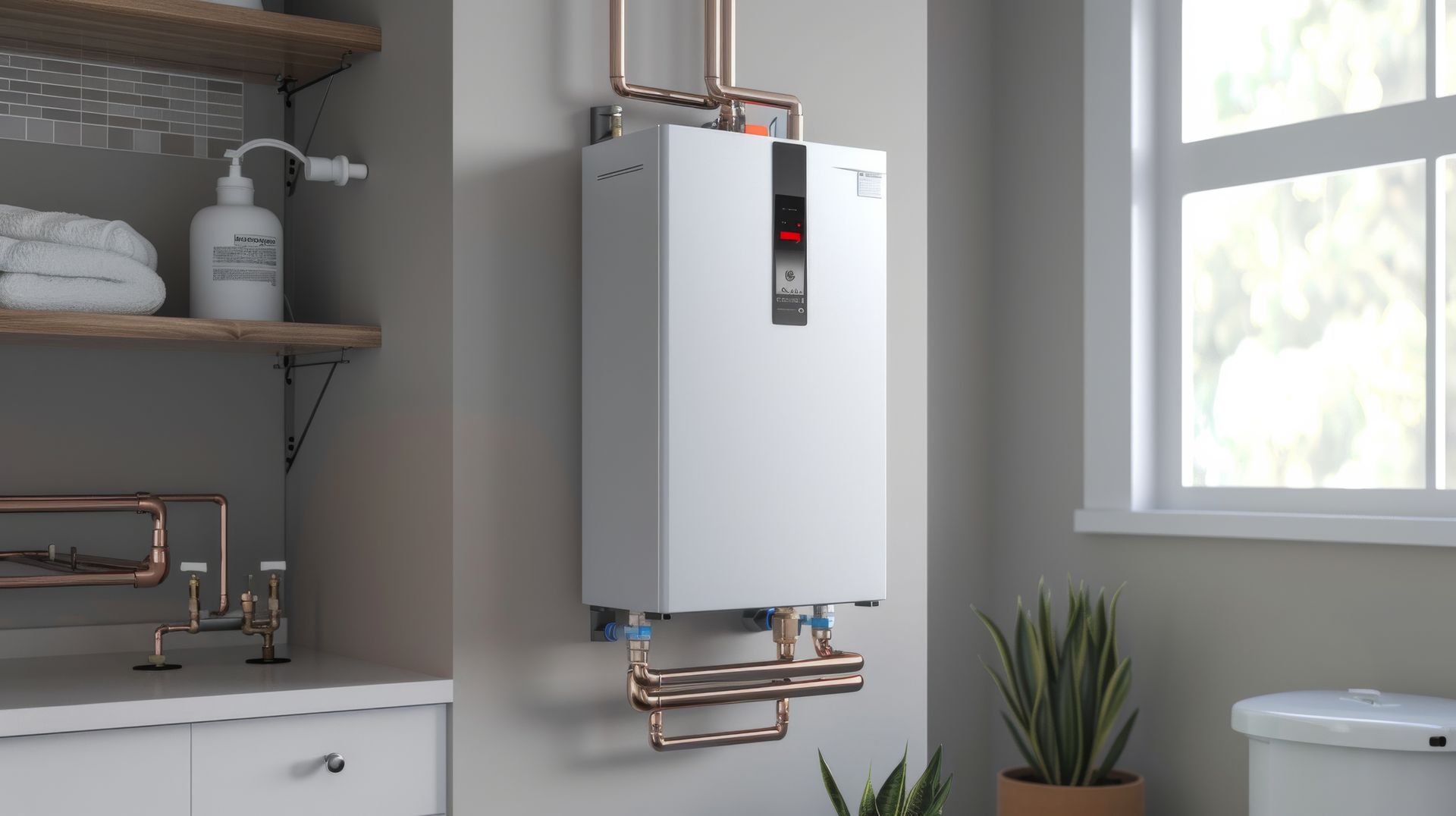
- Space savings. Tankless units are wall-mounted and significantly smaller than a storage tank, freeing up floor space in the utility room or wherever the current unit is installed.
Tank vs Tankless — A Plain-Language Comparison
Here is a straightforward side-by-side covering the factors that matter most to Charlotte homeowners:
| Factor | Tank Water Heater | Tankless Water Heater |
|---|---|---|
| Installation cost | Lower upfront investment | Higher upfront investment; may vary based on gas line and venting needs |
| Expected lifespan | Commonly 10–15 years | Can last 20+ years with proper maintenance |
| Energy efficiency | Heats stored water continuously | Heats water on demand; typically, more energy-efficient |
| Hot water capacity | Limited to tank size; can run out with high simultaneous use | Continuous supply within the unit’s rated flow capacity |
| Maintenance | Both systems require periodic maintenance; procedures, frequency, and costs differ between tank and tankless units | Both systems require periodic maintenance; procedures, frequency, and costs differ between tank and tankless units |
| Space savings | Requires floor space for the tank | Wall-mounted; frees floor space |
Considering a tankless water heater for your Charlotte home? Winn’s Plumbing provides no-fee initial assessments and upfront installation quotes. Contact our team to compare your options.
Four Factors That Determine Whether Tankless Is Right for Your Home
1. How long you plan to stay in the home
The higher upfront cost of a tankless system makes the most financial sense when you have enough time in the home to realize the benefits of lower energy consumption and avoid a second tank replacement. If you are planning to sell within a few years, the value of those longer-term benefits is limited to whatever the system adds to the home’s appeal — which varies by buyer and market.
2. Your household’s hot water demand
Tankless systems are well suited to higher-demand households where multiple showers, the dishwasher, and laundry may run at the same time. For these households, a properly sized tankless unit delivers continuous hot water within its rated flow capacity. For smaller households with lower simultaneous demand, the efficiency benefits are still present but the case for tankless over a well-sized tank unit is less clear-cut.
3. Your existing gas line and venting setup
Gas tankless units may require a larger gas supply line than the existing tank water heater. Whether a gas line modification is needed depends on the existing system and the calculated gas demand of the new unit — not every installation requires an upgrade. Venting also needs to be assessed. Winn’s Plumbing evaluates both during the initial no-fee assessment so you know the full scope before any decision is made.
4. Willingness to maintain the system
Tankless water heaters generally benefit from annual inspection and service following manufacturer recommendations. Maintenance may include descaling the heat exchanger, cleaning filters, and checking system components. Homes with harder water may need more frequent descaling. A tankless unit that is not maintained as recommended will degrade in efficiency and potentially shorten its service life. If annual maintenance is not practical for your household, a tank unit with its simpler maintenance profile may be the better fit.
Who Tankless Makes the Most Sense For
- Homeowners planning to stay long-term — long enough to benefit from the efficiency and extended lifespan
- Households with higher simultaneous hot water demand — multiple bathrooms in regular use, appliances running concurrently
- Homes where gas line and venting modifications are not required — the upfront investment stays closer to the base equipment cost
- Homeowners who will maintain the system as recommended — routine servicing is what supports the longer lifespan
Who May Be Better Served by a Standard Tank Unit
- Homeowners with a shorter or uncertain timeline — the upfront cost difference is harder to justify when long-term benefits may not be realized
- Homes where significant gas line or venting modifications are needed — the additional work extends the upfront cost gap considerably depending on scope
- Lower-demand households — the efficiency benefits are still present but the financial case is less compelling at lower usage levels
- Homeowners who prefer a simpler maintenance profile — tank units have fewer maintenance requirements than tankless systems
How Winn’s Plumbing Helps Charlotte Homeowners Decide
Choosing between a tank and tankless water heater is not a decision that should be made based on marketing alone. Winn’s Plumbing serves Charlotte, Matthews, Mint Hill, Indian Trail, Monroe, Concord, Ballantyne, and surrounding areas with a process designed to give you full information before committing to anything:
- No service call fee for an initial assessment. We evaluate your home’s hot water demand, existing gas line capacity, venting setup, and current unit before recommending anything.
- Upfront pricing before installation. You receive a clear quote covering equipment and all required work — no surprises after the job starts.
- Proper equipment sizing. We recommend a unit sized for your household’s actual demand, not the most expensive option available.
- Professional recommendations based on your plumbing system. Our recommendation accounts for your existing infrastructure — gas line, venting, and water supply — not a one-size-fits-all answer.
- Your approval before work begins. Nothing starts until you have reviewed and agreed to the scope and cost.
Frequently Asked Questions — Tankless Water Heaters in Charlotte, NC
Is a tankless water heater worth it in Charlotte, NC?
A tankless water heater can be a worthwhile investment for Charlotte homeowners who want energy efficiency, continuous hot water within the unit’s rated capacity, and a longer-lasting system. Although installation typically costs more than a traditional tank water heater, tankless systems offer benefits such as reduced energy consumption and space savings. The best choice depends on your household’s hot water demand, existing plumbing, and budget.
How much does tankless water heater installation cost?
Tankless water heater installation costs vary depending on the equipment, fuel type, gas line capacity, venting requirements, and installation complexity. Converting from a traditional tank to a tankless system typically costs more than replacing an existing tankless unit. Winn’s Plumbing evaluates your home’s requirements and provides a clear, upfront quote before any installation begins.
How long do tankless water heaters last?
A properly installed and maintained tankless water heater can last 20 years or longer, while traditional storage tank water heaters commonly last around 10–15 years. Actual lifespan depends on water quality, usage, installation conditions, and maintenance. Routine servicing and descaling when needed can help maintain efficiency and extend equipment life.
Do tankless water heaters actually save money?
Tankless water heaters can reduce energy consumption because they heat water on demand instead of maintaining a large tank of stored hot water. Actual savings depend on household usage, energy rates, equipment efficiency, and maintenance costs. While tankless systems generally have higher upfront installation costs, their energy efficiency and longer potential lifespan may provide long-term value.
Can a tankless water heater supply multiple showers?
Yes. A properly sized tankless water heater can supply multiple showers simultaneously, depending on the unit’s flow capacity and incoming water temperature. Every tankless system has a maximum gallons-per-minute (GPM) capacity. Winn’s Plumbing evaluates your household’s hot water demand to recommend a system capable of supporting your home’s needs.
How often does a tankless water heater need maintenance?
Tankless water heaters should generally be inspected and serviced annually, following manufacturer recommendations. Maintenance may include flushing or descaling the heat exchanger, cleaning filters, and inspecting system components. Homes with harder water may require more frequent descaling. Routine maintenance helps maintain efficiency, reduce mineral buildup, and support long-term reliability.
What are the disadvantages of a tankless water heater?
The main disadvantages of tankless water heaters are higher upfront installation costs, possible gas line or venting modifications, and routine maintenance requirements. Tankless systems also have flow-rate limitations, meaning an undersized unit may struggle to supply multiple fixtures simultaneously. A professional assessment helps determine whether tankless or a traditional tank water heater is the better investment for your home.
Ready to Find Out Which Option Is Right for Your Home?
Not sure whether a tankless water heater is right for your home? Winn’s Plumbing helps Charlotte-area homeowners compare traditional and tankless water heating systems based on their household needs, existing plumbing, and budget. Contact our team to schedule an assessment and receive a clear, upfront installation quote.
Call now: 980-217-1113 — No service call fee for an initial assessment
Winn's Plumbing — Licensed & Insured • 5-Star Rated • Serving Charlotte & the Surrounding Metro
Recent Posts