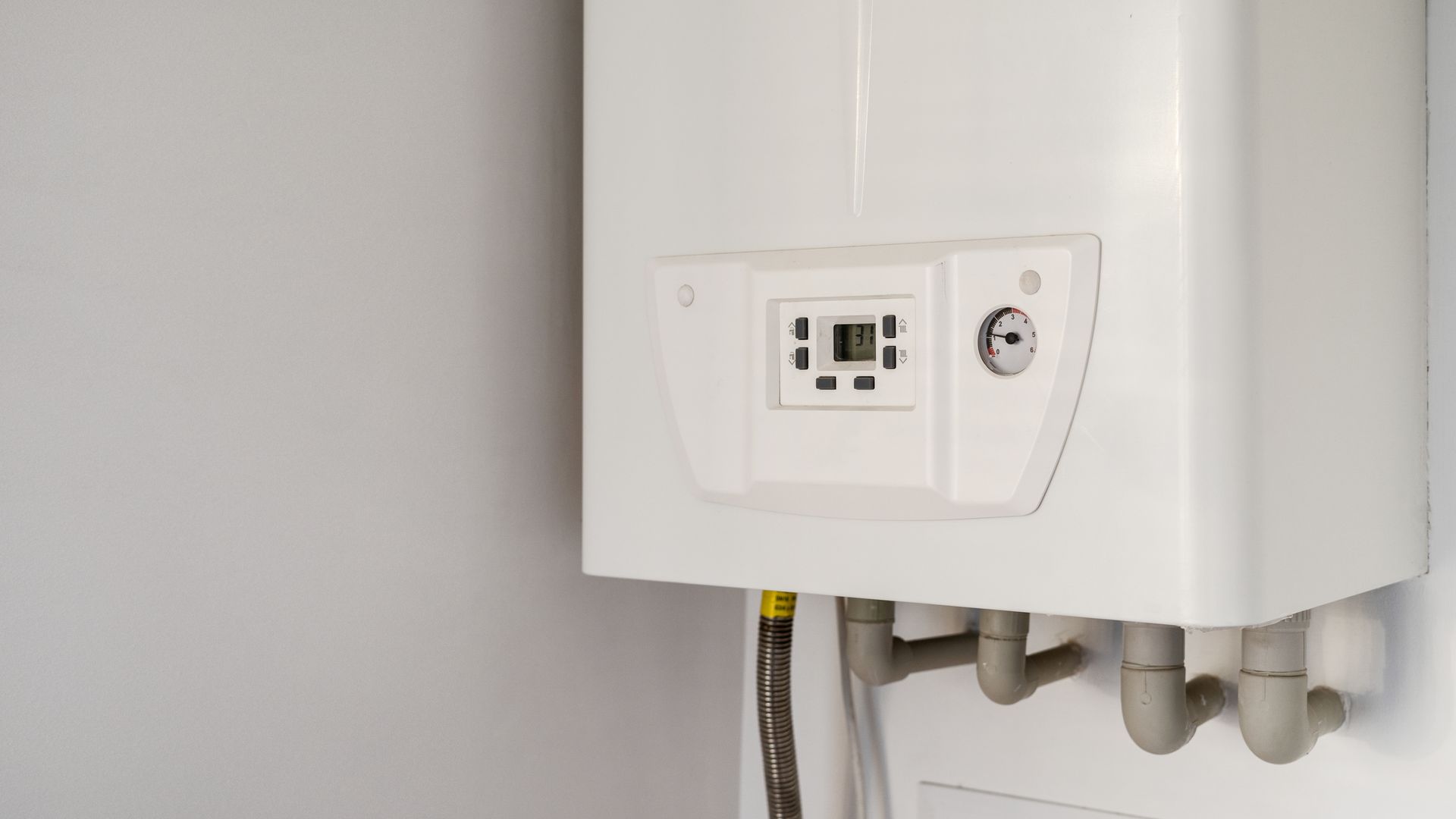
How Long Does a Water Heater Last? What Charlotte Metro Homeowners Should Know
Most homeowners do not think about their water heater until it stops working. But a water heater is one of the few appliances in a home that reliably signals its age through a serial number — and knowing that age gives you time to plan rather than react to a failure.
This guide covers how long different types of water heaters actually last, how to find out exactly how old yours is, and — most usefully — what you can do to get the maximum number of years out of the unit you already have.
Water Heater Lifespan by Type
| Water Heater Type | Expected Lifespan | With Maintenance | Charlotte Metro Context |
|---|---|---|---|
| Tank (gas) | 8–12 years | Up to 12 years | Many pre-2005 Charlotte metro homes still on original units |
| Tank (electric) | 8–10 years | Up to 10 years | Common in older homes without gas connections |
| Tankless (gas) | 15–20+ years | 20+ years | Annual descaling critical in moderate-hardness water |
| Tankless (electric) | 15–20 years | 20 years | Lower maintenance demand than gas tankless |
How to Find Out How Old Your Water Heater Is
The manufacture date of your water heater is encoded in the serial number on the label attached to the side of the unit. The format varies by manufacturer — here are the most common patterns for units found in Charlotte metro homes:
- Bradford White: The first letter represents the month (A=January, B=February, and so on) and the next two digits are the year. A serial beginning with C18 was manufactured in March 2018.
- Rheem / Ruud: The first four digits represent the week and year of manufacture. A serial beginning with 0418 was manufactured in the 4th week of 2018.
- A.O. Smith / American: The first letter represents the month (A=January) and the following two digits are the year.
- State Water Heaters: Same pattern as A.O. Smith — letter plus two-digit year in the first three characters of the serial.
Cannot decode it? Any plumber can read the manufacture date during a service visit. You can also search the manufacturer’s website with the model number for a decoder guide specific to your brand.
What Affects How Long a Water Heater Lasts
The lifespan ranges in the table above assume average conditions. In practice, several factors push a unit toward the shorter or longer end of its range:
Water quality and mineral hardness
Charlotte’s municipal water supply has moderate mineral hardness — enough to cause sediment buildup inside tank heaters and scale accumulation inside tankless heat exchangers over time. Hard water is the single biggest environmental factor shortening water heater lifespan. Homeowners in areas with particularly hard water may benefit from a water softener upstream of the unit.
Annual maintenance history
Tank water heaters benefit from an annual sediment flush and anode rod inspection. Tankless units require annual descaling of the heat exchanger. A unit that has been consistently maintained will almost always reach the upper end of its lifespan range. One that has never been serviced will often fail at the lower end.
Water pressure
High water pressure accelerates wear on the pressure relief valve and tank walls. Concord and some Charlotte neighborhoods can experience elevated municipal pressure. A pressure reducing valve set to 60–80 PSI protects the water heater alongside the rest of the plumbing system.
Installation quality
A water heater installed without proper venting, without an expansion tank on a closed system, or with incorrect gas line sizing will fail earlier than expected. Manufacturer warranties are frequently voided by improper installation, which means repair costs fall entirely on the homeowner.
Household usage volume
A 40-gallon tank servicing a household of five people cycles significantly more often than the same unit servicing two. High-demand households that consistently push the unit to its limits will see it fail earlier. Upsizing to a 50-gallon unit or upgrading to tankless is often the right long-term decision in these situations.
How to Extend Your Water Heater’s Lifespan
Most of the factors above are within a homeowner’s control. Here is what actually extends a water heater’s useful life:
Annual sediment flush (tank units)
Sediment accumulates on the bottom of tank water heaters over time, reducing efficiency and creating conditions that accelerate corrosion. Flushing the tank annually — connecting a hose to the drain valve and draining until the water runs clear — removes this buildup. On older units with significant accumulated sediment, a professional flush is safer than a DIY attempt, as the drain valve can seize on units that have never been flushed.
Anode rod inspection and replacement
The anode rod is a sacrificial metal rod inside the tank that corrodes in place of the tank walls. When the anode rod is depleted, the tank itself begins to corrode. Inspecting and replacing the anode rod every 3 to 5 years is one of the most effective ways to extend tank lifespan — and one of the most frequently overlooked maintenance tasks.
Annual descaling (tankless units)
Tankless heat exchangers accumulate mineral scale over 12 to 18 months of use in Charlotte’s moderate-hardness water. A descaling flush circulates a mild acid solution through the heat exchanger to dissolve deposits and restore efficiency. Skipping this service is the most common reason tankless units underperform or fail before their expected lifespan. See our tankless maintenance guide for a full breakdown of what the annual service involves.
Pressure management
If you do not already have a pressure reducing valve and your home is on municipal water supply, having a plumber test your water pressure is worthwhile. Sustained high pressure is a silent lifespan shortener for both water heaters and the broader plumbing system.
Temperature setting
Most water heaters are factory-set to 120°F. Running the unit at higher temperatures continuously accelerates sediment baking and increases tank stress. Unless there is a specific reason to run hotter, 120°F is the recommended setting for both efficiency and longevity.
Charlotte Metro Context — When to Start Paying Attention
Charlotte’s housing stock spans several development eras, each with its own water heater age profile right now:
- Myers Park, Dilworth, Eastover (pre-1980 construction): Many homes are on their third or fourth water heater. If the current unit has not been replaced within the past 10 years, assess it now.
- SouthPark, South Charlotte (1980s–1990s construction): If the water heater has never been replaced in a home built 30–40 years ago, it is past end-of-life regardless of whether it is still working.
- Indian Trail, Mint Hill, Stallings (late 1990s–2000s): Homes now 20–25 years old. Original tank water heaters in this era are at or past their expected lifespan. Time to plan.
- Monroe, Matthews, Concord growth areas (2000s–2010s): Homes 15–20 years old entering the first replacement window. Schedule an inspection and confirm the anode rod has been maintained.
- Ballantyne, Berewick, newer developments (2010s+): Units are 10–15 years old. Establish an annual maintenance routine now to reach the upper end of the lifespan range.
Planning Ahead vs Reacting to a Failure
A water heater that fails without warning means a cold household, potential water damage, and an urgent service call. Knowing your unit’s age and scheduling annual maintenance from year 5 or 6 forward is the most reliable way to avoid that scenario — and to make the replacement decision on your timeline rather than the unit’s.
For water heater repair and diagnosis across the Charlotte metro, see our water heater repair page. For installation and replacement, see our water heater installation page. Call 980-217-1113 during business hours to schedule.
Winn's Plumbing — Licensed & Insured • 5-Star Rated • Serving Charlotte & the Surrounding Metro